
Country showcase · April 2026
What Germany is building in defence tech (2026)
Helsing, Quantum-Systems, ARX Robotics and 100+ more.


Florian Seibel flew helicopters in the Bundeswehr for 17 years, trained as an aerospace engineer at the University of the Bundeswehr Munich, and in 2015 left a PhD to launch Quantum-Systems in Gilching, half an hour west of Munich on the S8. The company builds a fixed-wing reconnaissance drone called the Vector that one person can carry, used by both the Ukrainian and German armies, and is now valued at €3bn. In 2024 Seibel co-founded a second company, Stark in Berlin, which builds loitering munitions.
Most of the German defence-tech companies people now talk about did not exist five years ago. Helsing, founded in 2021 in Munich, is Europe's most valuable private defence company today. Arx Robotics, founded in 2022 by three former Bundeswehr officers from a university research lab, won a British Army contract in April. Tytan Technologies, Alpine Eagle, Reflex Aerospace and the rocket-and-spaceplane cluster at Ottobrunn all sit inside an hour's drive of central Munich.
The money behind this is also recent. In March 2025 the Bundestag amended the German constitution to exempt defence spending above 1% of GDP from the federal debt brake, and the 2026 defence budget that followed is the largest since the Federal Republic existed. Defence Minister Boris Pistorius calls the project kriegstüchtig, war-capable, a word post-1945 Germany had spent decades avoiding.
The DefenceJobs atlas tracks 100+ defence-technology companies headquartered in Germany. Most of the startups are in Munich, with Berlin leaning toward software, Bremen toward space and Kiel toward naval. The German primes, Rheinmetall, Hensoldt, Diehl, KNDS, Airbus Defence and Space, MBDA and TKMS, are the larger industrial backdrop they all operate alongside.
Drones and UAV
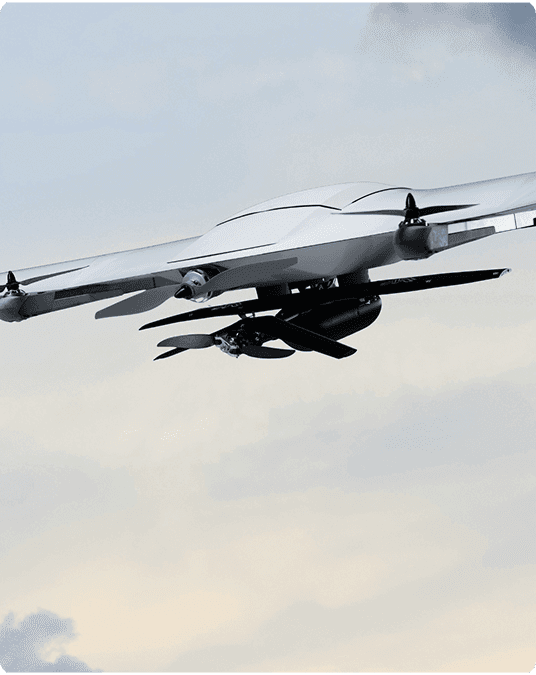
The Vector takes off vertically and cruises like a fixed-wing aircraft, an airframe Seibel patented when he started the company in 2015. Ten years on, the Bundeswehr placed a €210m framework order, Twister, for up to 747 systems to replace the older ALADIN drone in the army, navy and air force. The US Army selected the same airframe in April 2026 under a $15.3m award for brigade-level reconnaissance. Quantum-Systems drones have flown more than 20,000 combat hours in Ukraine since February 2022.
Stark is in Berlin, with a production hall in Munich that opened in summer 2025. Its main product, Virtus, is a one-way attack drone shaped like a small aircraft that launches vertically and dives terminally at 250 km/h. The Bundeswehr is procuring up to 12,000 loitering munitions from all three suppliers under separate framework contracts. The Bundestag approved Helsing and Stark in February 2026, with initial firm orders of around €300m each, and Rheinmetall followed in April under a framework worth up to €2.4bn. In October 2025, in trials with British forces in Kenya and German forces near Munster, all four Virtus rounds missed their targets. One crashed into woodland 150 metres from its aimpoint, another's battery ignited after impact. Stark said the company had crashed drones a hundred times during development and this was what testing looked like. In a separate German trial Helsing's HX-2 reportedly scored 17 hits while Virtus missed both targets. Sequoia had led Stark's $62m Series A at a $500m valuation in August, two months before the trials. The Bundeswehr placed the production order regardless.
Wingcopter in Weiterstadt near Darmstadt built its name on delivery drones for humanitarian logistics. In February it signed a manufacturing joint venture with Ukraine's TAF Industries to build reconnaissance UAVs in Germany, with Chancellor Merz receiving the partnership at the Munich Security Conference. Avilus in Ismaning builds three larger dual-use platforms with Hensoldt sensors, including an electric medevac airframe called Grille. Donaustahl, in the Bavarian town of Hutthurm, financed itself in 2025 with a 5.9% retail bond and a €4m crowdfunding round, hired a former KNDS executive as CFO, and tripled its revenue selling loitering munitions it markets as Offense-Tech. Smaller drone teams sit in Berlin, Konstanz, Hamburg and Essen.

Quantum Systems
Builds eVTOL fixed-wing ISR drones and multi-domain autonomous systems software for NATO-aligned military forces, with over 20,000 combat flight hours logged in Ukraine.


STARK Defence
Builds loitering munitions, unmanned surface vessels and multi-domain C2 software for NATO militaries, with systems already deployed in Ukraine.


German tactical drone manufacturer delivering mini and micro UAV systems for military, government and security missions, including Bundeswehr-certified reconnaissance platforms.
Builds dual-use unmanned aircraft in the 500-1000 kg class for military medical evacuation, tactical airlift and long-range surveillance, operated under its own Light UAS Operator Certificate.
Builds loitering munitions, drone avionics and UAV warheads from Hutthurm, Bavaria, with a focus on sovereign European production and field-proven systems.

Builds VTOL fixed-wing drones for ISR, border surveillance, inspection and tactical military operations, sold to armed forces and security agencies across Europe.
Develops and manufactures UAV drones for reconnaissance and surveillance missions, offering modular, encrypted drone systems with dual-use applications for professional security operations.
Twentyfour Industries designs, manufactures and deploys European drone systems at scale for military and electronic-warfare environments.
Autonomous drone systems for explosive ordnance disposal and counter-IED operations. PEREGRINE drone deploys LANCE disruptors from airborne or landed positions with AI-assisted target acquisition. Delivering to Ukrainian forces.

Builds the Wingcopter 198 tilt-rotor VTOL drone for long-range cargo delivery, LiDAR infrastructure surveying and reconnaissance missions, with a joint venture scaling production of reconnaissance UAVs in Germany for Ukraine.
Counter-drone
Aaronia is in Strickscheid, a village in the Eifel hills near the Belgian border with 28 inhabitants and no railway station. The company has been there since 2003 and now employs 75 people who build RF spectrum analysers and the AARTOS counter-drone system, used by the German, Austrian, Australian, Portuguese, Finnish and Estonian armed forces, the Dutch and British defence ministries, and Heathrow Airport.
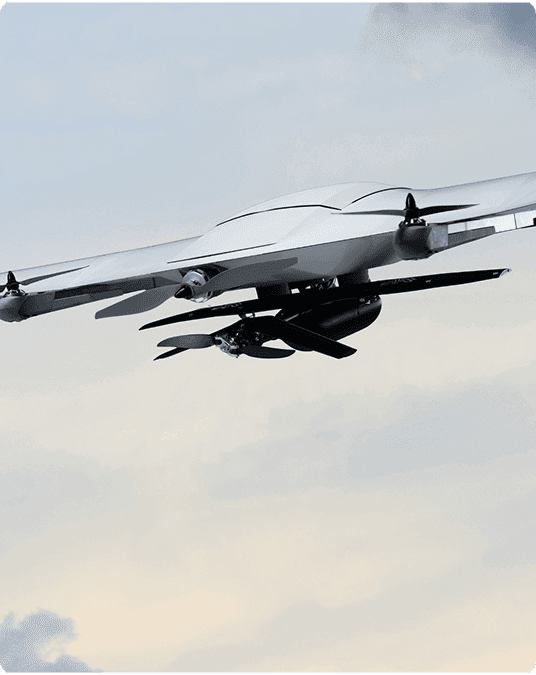
Tytan Technologies in Munich builds the METIS interceptor, an AI-guided drone that hunts other drones at 350 km/h within a 25 km radius. Earlier this year Tytan closed a €30m Series A co-led by Armira and the NATO Innovation Fund, won a slot in a multi-hundred-million-euro Bundeswehr counter-drone programme, and announced engine and sensor partnerships with Deutz and Hensoldt. The interceptor is designed for production at up to 3,000 units a month. Alpine Eagle, also in Munich, builds Sentinel, an air-to-air counter-drone platform that operates from the sky rather than the ground, with the Bundeswehr as launch customer in 2025.
Inleap Photonics in Hanover, a 2023 spin-off from the Laser Zentrum, builds a fast-steering laser called FastLight Shield. In April 2026 it was integrated onto Stark's Vanta unmanned surface vessel and is rated to defeat up to 300 drones a minute against swarm attack. Dedrone, founded in Kassel and now owned by the American police-tech group Axon, is one of the longest-running German counter-drone names. Skylance in Hürth markets a kinetic counter-FPV interceptor. Riseport Europe in Hamburg has built a passive acoustic-and-optical detection system priced under €100k a unit.

Alpine Eagle
Builds airborne air-to-air counter-UAS systems that detect, track and intercept hostile drones using networked airborne sensors and interceptors.
Tytan Technologies
Builds AI-powered autonomous interceptor drones for counter-UAS operations, designed to detect, track and neutralise drone threats at scale for European armed forces.


Builds counter-drone systems that detect, track and neutralise unauthorised UAVs for military, government and critical infrastructure operators across 35+ countries.

Builds ultra-fast laser beam steering systems for counter-drone defence and high-speed industrial laser manufacturing, developed as a spin-off from Laser Zentrum Hannover.
Develops the ARGOS APS passive counter-drone system using AI-assisted acoustic and optical sensor fusion instead of radar to avoid electronic detection. Designed by soldiers for soldiers with a target price under EUR 100,000 per unit for scalable frontline deployment.
Counter-drone startup developing the DroneHammer, a laser-guided interceptor missile that neutralises FPV drones at up to 2,000 metres for around EUR 2,500 per shot. Uses CO2-based fragmentation instead of explosives. Pre-series production planned for Q4 2026.

Develops digital wideband RF jammers and counter-drone systems manufactured in Germany. The modular XWJ2 platform covers vehicle, portable and stationary jamming across 800+ security projects in 90+ countries since 2003.
AI and defence software
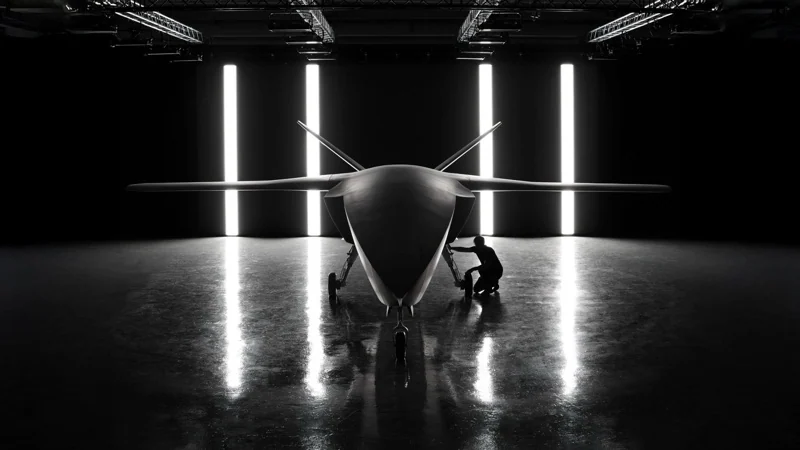
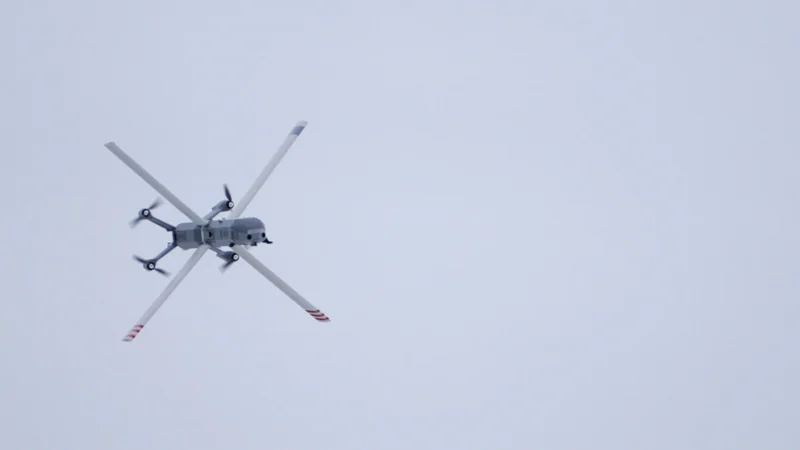
Helsing was founded in 2021 by Torsten Reil, who had earlier sold a motion-synthesis company called NaturalMotion to Zynga; Gundbert Scherf, a former McKinsey defence partner who had spent two years as a special representative inside the German Ministry of Defence; and Niklas Köhler, a machine-learning engineer from medical AI at Helmholtz Munich. The first office was in central Munich, and five years later the company has offices in Berlin, London and Paris, subsidiaries in Estonia, France and the United Kingdom, around 900 staff, and a €12bn valuation, set in a €600m Series D in June 2025 led by Daniel Ek's Prima Materia. Helsing is Europe's most valuable private defence company.
Helsing's product range now spans three domains. The HX-2 is a strike drone, the SG-1 Fathom is an underwater drone, and the CA-1 Europa is an autonomous combat aircraft programme run with Saab. In November 2025 Helsing and Saab Germany signed a €258m contract in Munich to integrate Helsing's Cirra AI software into Saab's Arexis electronic-warfare sensor suite for the Eurofighter EK, the German variant replacing the Tornado in the EW role. The wider Bundeswehr loitering-munition tranche put Helsing on the same paper as Stark and Rheinmetall, and in a comparative trial Helsing's drones reportedly hit 17 targets to Stark Virtus's zero.
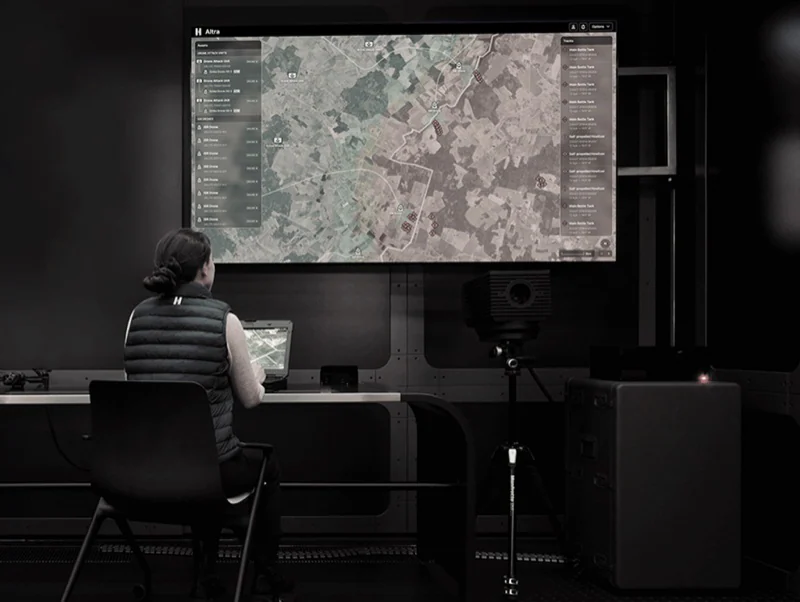
Beyond Helsing, a cluster of smaller defence-software companies has formed in the past three years, most of them in Munich. 21strategies in Hallbergmoos, just past Munich's airport, builds Third Wave decision AI for the Bundeswehr with Hensoldt as both an investor and a consortium partner. Aereus, founded in April 2025 by two computer-vision researchers, is in NATO's DIANA programme and won the German leg of the EU defence-innovation hackathon working on real Ukrainian reconnaissance footage. Traversals in Erlangen builds an OSINT fusion platform that, among other things, monitors the Ukrainian front line. Hat.tec in Neubiberg ships airborne mission software for manned-unmanned teaming. Scipio Networks in Berlin is building military logistics software, and 3yourmind across town runs additive-manufacturing workflow tools that have ended up identifying spare parts for armoured-vehicle fleets. Project Q, a Munich open-source initiative, ships an Apache-licensed coordination platform called Hydris.
Some of the engineers behind these companies come from the German automotive industry, which has announced multi-thousand-job cuts at Bosch, ZF and Volkswagen since 2023. Rheinmetall received around 120,000 applications for 3,000 advertised positions in the first half of 2025 and has been recruiting at automotive sites being shut down. Helsing, Stark and Quantum-Systems do not publish their hiring numbers, but the largest defence-tech employers and the largest automotive employers are within a few hours of each other in southern Germany.

Helsing
Builds battlefield AI software, autonomous strike drones and electronic warfare systems for European armed forces.

SE3Labs
German spatial AI company building battlefield 3D understanding, GNSS-denied navigation, target localisation and natural-language swarm orchestration for autonomous defence systems.
Builds Third Wave AI software for military decision-making under uncertainty and industrial supply chain resilience, with a defence platform based on adversarial simulation, autonomous tactics generation and multi-agent reinforcement learning.

Builds on-demand manufacturing software that helps defence and industrial organisations identify spare parts suitable for additive manufacturing and manage distributed production workflows.
Develops VR and mixed-reality flight simulators for Eurofighter and Tornado aircrew training. A Bundeswehr partner for over 20 years, staffed by 50+ engineers including former Luftwaffe pilots.
Builds a geospatial intelligence platform that ingests drone video, satellite imagery, SAR, LiDAR and SIGINT, then automatically fuses it into a persistent 3D picture of the operational environment for military and security decision-makers.

Builds AI software and systems for autonomous drone teaming, counter-UAS and ISR across land, air and sea domains.
AI-powered explosive ordnance recognition and disposal. SAFETREK app is the first AI software to detect, classify and geolocate mines and IEDs. Partners with ARX Robotics and WARGdrones on Project Vulture for rapid minefield breaching.
Darknet monitoring and leaked credential detection platform for defence and critical infrastructure. Indexes 80 billion accounts and 300 billion assets with AI-driven risk prioritization. DefenseTech-Inkubator.NRW member.

Builds mission software and AI autonomy tools that let pilots and operators coordinate manned and unmanned aircraft from a single interface.
Builds OSINT and link analysis tools that help intelligence agencies, law enforcement and corporate investigators uncover hidden connections across open-source, dark web and commercial data sources.
Munich AI company building decentralized AI-agent swarms for autonomous mission planning, mesh networking and resilient satellite operations in contested environments.
Builds space traffic management and collision avoidance platforms that help satellite operators navigate an increasingly crowded orbit.

Develops AI-supported software solutions for defence and security capabilities, focusing on data-driven decision-making and situational awareness through their Q-SUITE platform.
Designs and manufactures high-fidelity flight simulators, maintenance training rigs and augmented reality training devices for military and civil aviation customers worldwide.
Berlin startup modernising military logistics with AI-driven planning, real-time supply chain visibility and resilient distribution. Replaces analogue processes used by armed forces with software-based planning tools.
German cybersecurity company building decentralized trust infrastructure for defence data, mission control, digital asset traceability and high-assurance distributed systems.
Spleenlab develops AI software for autonomous systems, including GPS-denied navigation, ISR, collision avoidance and drone autonomy for defence and robotics applications.
Uses AI to process billions of open sources for real-time situational awareness and crisis intelligence. Provides 24/7 dynamic frontline monitoring of the Ukraine conflict for government and military organizations. Spin-off from FAU Erlangen-Nuremberg.
Ground robotics
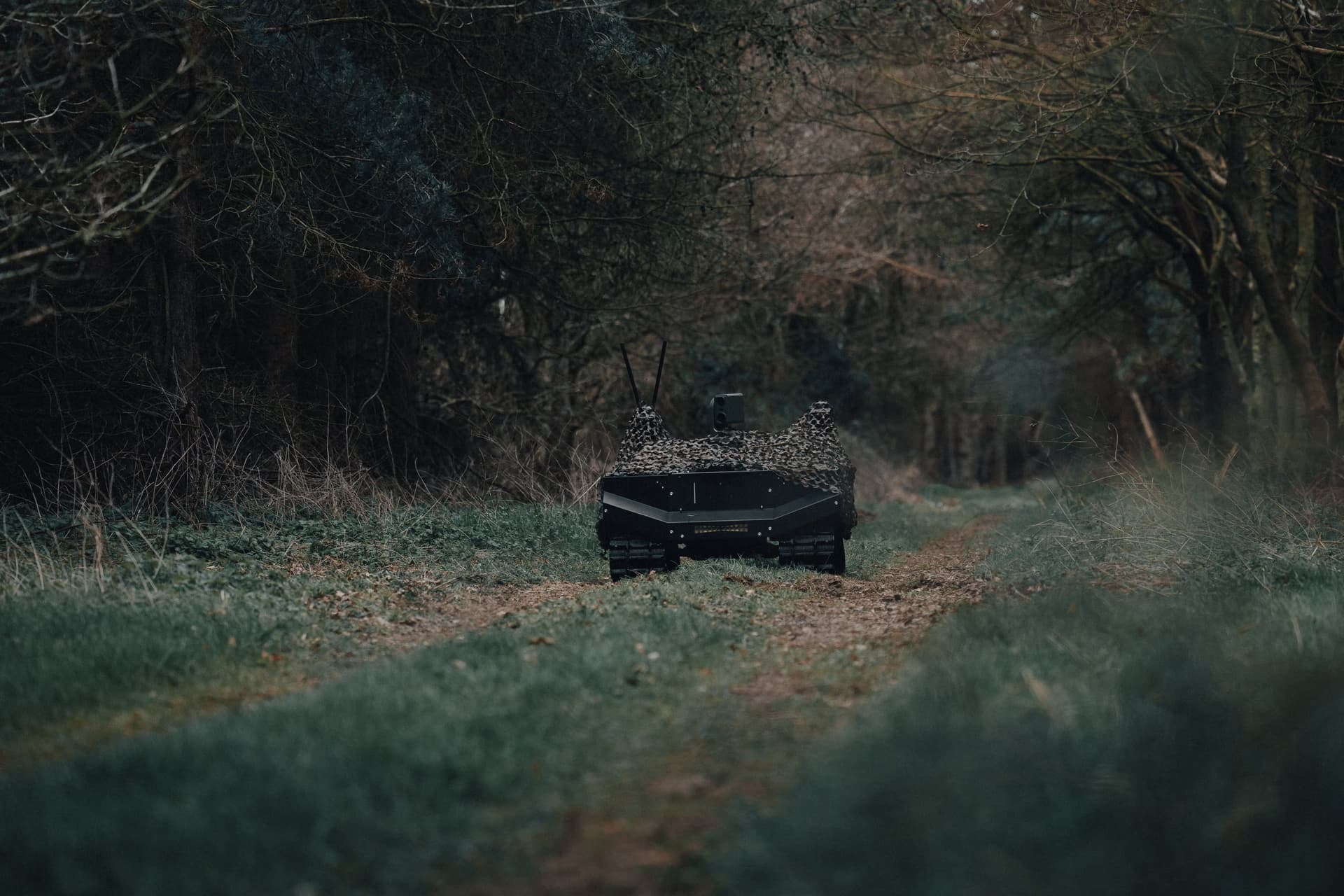
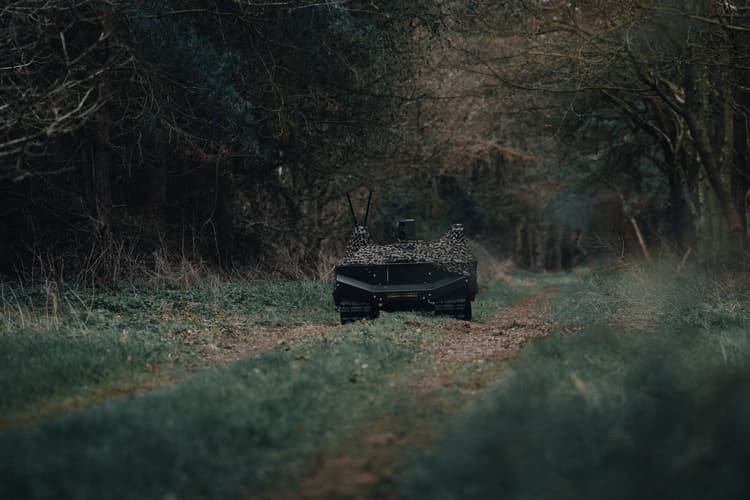
Arx Robotics was founded in 2022 by three former Bundeswehr officers, Marc Wietfeld, Maximilian Wied and Stefan Roebel, as a spin-off from the Gereon research project at the University of the Bundeswehr Munich. Its flagship vehicle, also called Gereon, is a tracked unmanned ground vehicle small enough to fit in the back of a Sprinter van, used for reconnaissance, logistics, casualty evacuation, route clearance and weapons-carrier missions. Germany has supplied around 30 Gereon units to Ukraine, and the British Army signed a contract in April 2026.
Arx closed a €42m Series A across two tranches in 2025, led by HV Capital with Speedinvest behind, and now employs around 140 in Munich. The Franco-German Main Ground Combat System programme has slipped to an operational target of 2040–2045, and the joint project company was only registered in Cologne in April 2025. France is studying a national fallback. Arx vehicles are already in service.
Swarm Biotactics in Kassel builds cyborg-insect swarms with onboard edge AI for reconnaissance in collapsed structures and denied terrain, at a much earlier stage than Arx.
ARX Robotics
Builds modular autonomous ground vehicles and fleet-digitisation software for Western armed forces, with systems combat-proven in Ukraine and contracted by the British Army.

RobCo
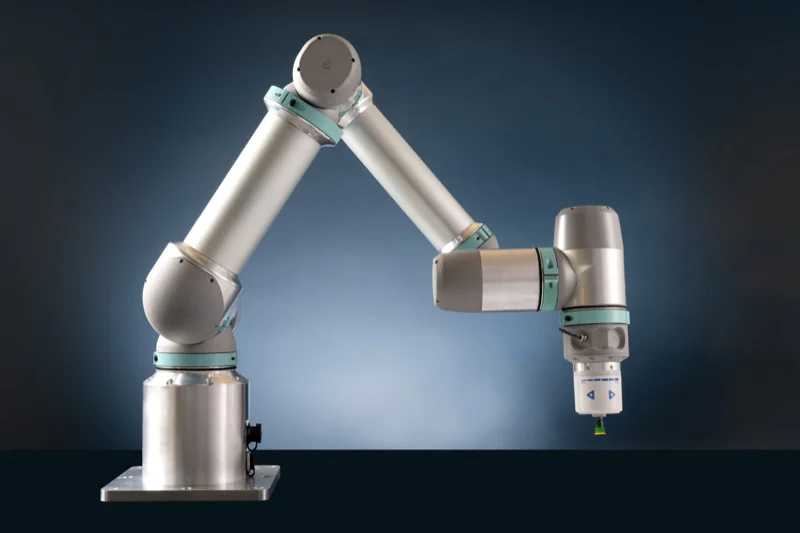
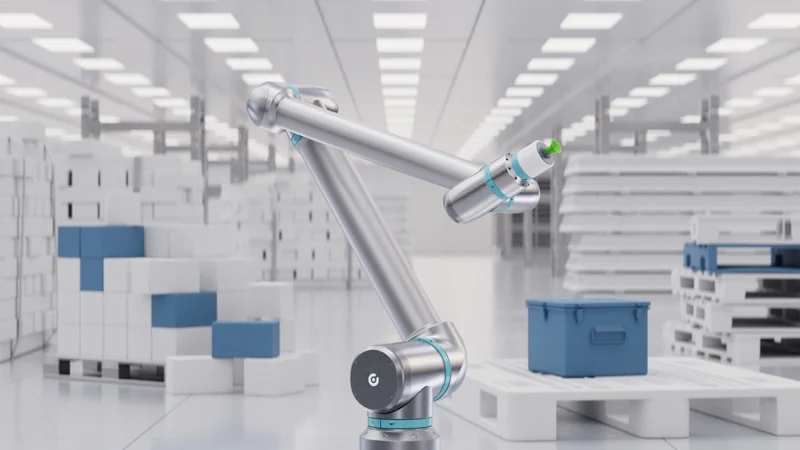
Develops and manufactures modular robot automation solutions for small and medium-sized enterprises, offering flexible hardware kits and no-code software platforms.
Sensors and electronic warfare
Plath has been building signals-intelligence equipment from a Hamburg radio-engineering bureau that Maximilian Wächtler established in 1950. The company today is a family-owned group of 12 subsidiaries with more than 500 staff, building COMINT systems, SIGINT systems, direction-finding equipment and electronic-warfare suites used at sea, on the ground and in the air, though it does not publicly name customers. In November 2025 Plath conducted at-sea trials of a new naval product called Nautilus, and earlier in 2025 flew an EW jamming demonstrator with Airbus Defence and Space and Hensoldt as part of the luWES programme.
Orbint, founded in Neubiberg next to the University of the Bundeswehr Munich in March 2025, builds a distributed small-sat constellation that detects, identifies and geolocates radio-frequency signals in near-real-time, with Rohde and Schwarz taking a strategic stake in November. Orbint is a UniBwM defence spin-off, alongside Quantum-Systems (via Florian Seibel) and Arx Robotics (via the Gereon project), all out of the same university.
Aerodata in Braunschweig is the world market leader in flight-inspection systems used by aviation authorities. Vected in Fürth and Andres Industries in Berlin build thermal imaging and night-vision optics. Hema Electronic in Aalen makes ruggedised FPGA vision modules for armoured vehicles and submarines. Schmidt and Bender in the Hessian village of Biebertal, where two precision-mechanics instrument makers founded the firm in 1957, today supplies riflescopes to the United States Marine Corps and to United States Special Operations Command. True Detection Systems out of the Federal Institute for Materials Research in Berlin makes a 1.3kg fluorescent-dye explosives-trace detector.

Andres Industries
Designs and manufactures thermal imaging clip-on devices, night vision goggles and protective equipment for military and law enforcement customers.



PLATH
Designs and integrates SIGINT, COMINT and electronic warfare systems for intelligence, law enforcement and defence customers across land, naval and airborne platforms.

Builds RF spectrum analysers and the AARTOS counter-drone detection and defence system, used by militaries and critical infrastructure operators worldwide.

Builds flight inspection systems and airborne surveillance platforms for aviation authorities, military and government agencies worldwide, and holds the world market leader position in flight inspection.

Designs and manufactures FPGA-based embedded electronics and optronics hardware for military vehicles, submarines and frigates, as well as industrial embedded vision and intelligent camera systems.
Kappa Optronics develops certified camera and vision systems for aviation, defence, UAV/UAS, situational awareness and rugged monitoring applications.
Develops precise indoor and outdoor positioning systems using proprietary algorithms and rugged hardware for defence and security applications. Supplies Rheinmetall and ARX Robotics with radio-based position tracking for GPS-denied environments.
Builds a distributed small-satellite constellation that detects, identifies and geolocates radio-frequency signals globally in near real time for defence and security intelligence applications.
Manufactures precision riflescopes for military, police, hunting and competition shooting, produced entirely in Biebertal, Germany since 1957.
Lightweight mobile explosives trace detector weighing 1.3 kg, using chemical-optical measurement technology with patented fluorescent dyes that react to TNT and other explosives. BAM spin-off supported by the EXIST funding programme.
Develops and manufactures thermal imaging cameras and electronic modules for military, government and civilian use. Founded in 2012, the company produces all devices at its Fürth facility and serves as OEM partner for thermal imaging technology.
Communications
Aeromaritime Systembau in Neufahrn bei Freising, 20 minutes north of Munich airport, has supplied 650+ integrated communications systems across 45+ navies since the company was founded in 1971. It builds the APCOS 4000 ship-communications architecture that runs on the German Navy's F125 frigate, the SAMMS secure-messaging system, and multifunctional submarine antennas.
CeoTronics in Rödermark builds tactical headsets and PTT control units. Cestron in Berlin builds HF and broadcast antennas. Neosat in Neubiberg builds eavesdropping-secure SATCOM. Elna in Tangstedt builds maritime MF/HF antennas. ZeroPhase in Munich, founded in 2025, builds adaptive data links that keep unmanned systems connected under jamming and electronic warfare.

blackned develops digital command-and-control, tactical communications and networking systems for the digitalisation of armed forces.
Makes tactical communication hardware — PTT control units, DECT wireless intercom systems and hearing-protective headsets — for armed forces, police and emergency services.
Designs, manufactures and commissions HF radio communication systems and antenna infrastructure for military and government customers. One of Europe's leading integrators for naval ship-to-shore HF comms covering VLF through UHF bands.
Manufactures rugged MF/HF military and submarine antennas under the DUK brand. Installed on naval fleets worldwide including the German Navy. Founded 1952, all products made in Germany near Hamburg.
Builds end-to-end encrypted mobile phones with 4096-bit key exchange and hardened OS. Pioneered the secure smartphone market in 2003 with patented Baseband Firewall that detects IMSI catchers. Used in 50+ countries.

Value-added distributor of military communications, tactical radios, SATCOM, optronics and night vision devices. Serves as MRO partner to the Bundeswehr for rescue equipment, NVGs and military radios since 1992.
Compact eavesdropping-secure satellite communication using software-defined radios and MIMO antenna technology. Universität der Bundeswehr München spin-off, winner of the CPM Innovation Award 2025.
Develops and manufactures tactical audio communication systems for military, special forces and emergency services. Professional-grade headsets and audio equipment for noisy and critical environments. Made in Germany.
Europe's only manufacturer of guyless mobile antenna masts up to 40 metres. Over 1,900 units in military service worldwide for communications, radar and surveillance. Bundeswehr supplier since 1974.

Builds software-defined, adaptive data links that keep unmanned ground, air and sea systems connected under jamming and electronic warfare conditions.
Develops compact, mobile telescopic mast systems with self-locking structures for mounting sensors and effectors on military platforms. Products feature internal cable routing and modular payload interfaces for field deployment. Founded 2011.
Naval and maritime
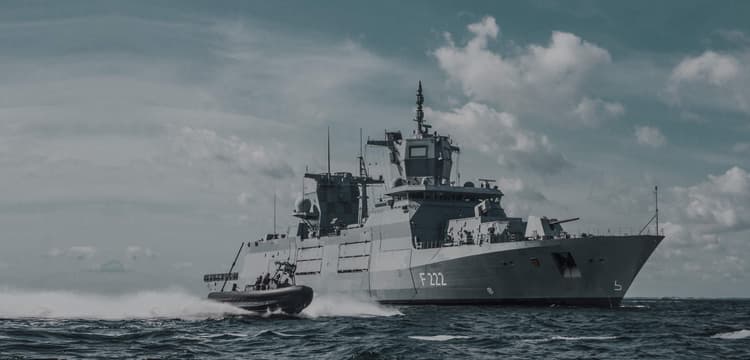
In October 2025 ThyssenKrupp spun off TKMS, its submarine-building arm, and floated 49% on the Frankfurt Stock Exchange. The shares opened at €60 and closed the first day near €107, a 78% gain. Germany had already lifted its Type 212CD submarine order from two boats to six in December 2024, and Norway signed for two more in January 2026, taking the joint German-Norwegian programme to its planned ceiling of 12. The Type F127 air-defence frigate, replacing the Sachsen class, is expected to be contracted in summer 2026 with first delivery around 2034. In September 2025 Rheinmetall agreed to acquire the private shipbuilder NVL from the Lürssen family.
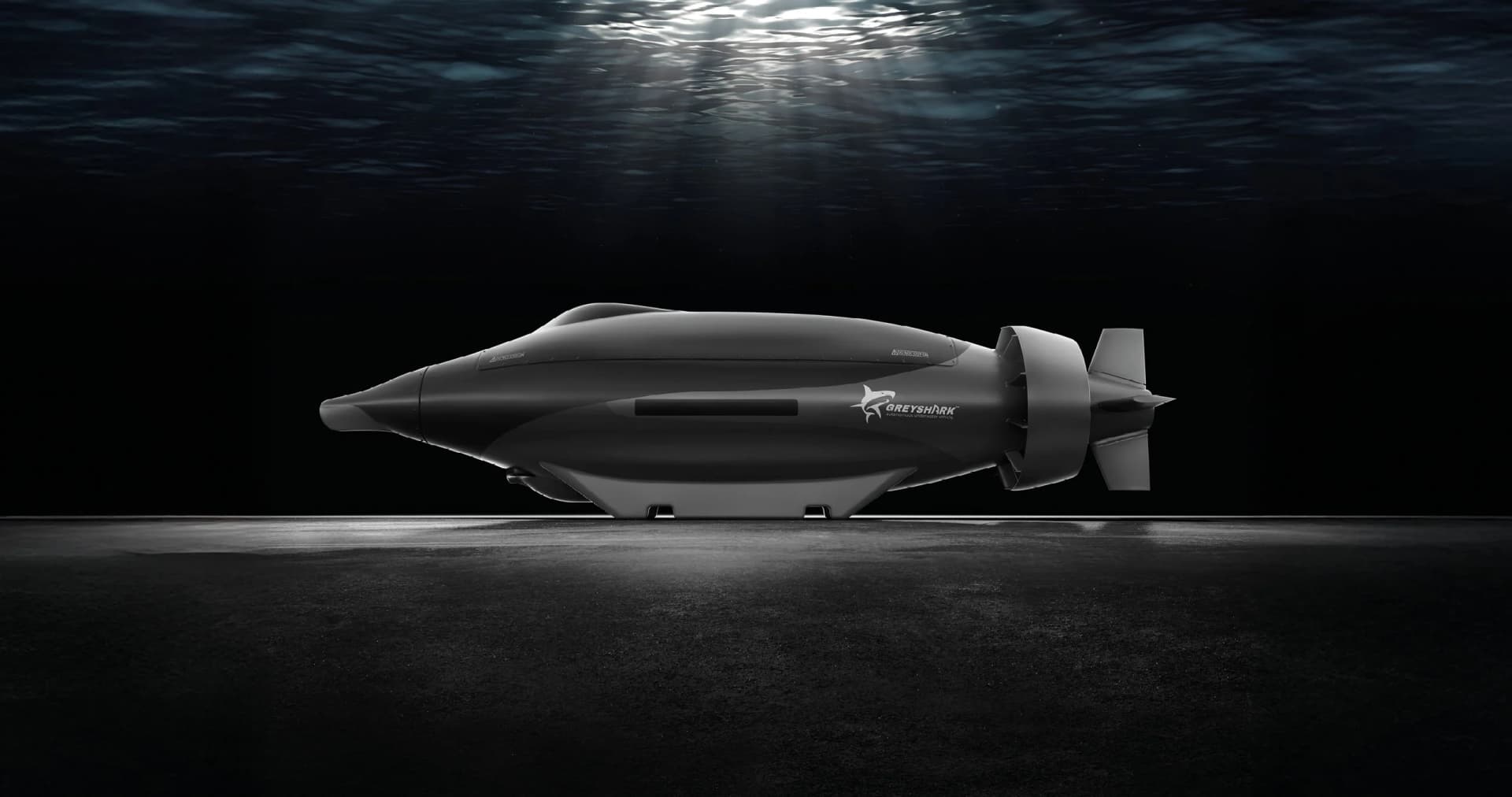
Elac Sonar in Kiel, owned by the British defence group Cohort, builds submarine sonar suites and has just rolled out a new seabed surveillance product called Enlitor. north.io, also in Kiel, builds the TrueOcean and TrueEarth platforms, big-data infrastructure for underwater and terrestrial sensor networks. The Portuguese Navy is a customer, and the company joined NATO's REPMUS exercise in 2025. Gabler Maschinenbau in Lübeck builds submarine periscopes and torpedo-tube-launched USVs. Euroatlas in Hamburg builds the Greyshark autonomous underwater vehicle. Flanq in Rostock builds Q-Recon unmanned surface vessels and the Q-Mind autonomy stack. Uni-Safe in Wedel builds special-purpose RHIBs. EvoLogics in Berlin builds the underwater acoustic modems used by most of them.
ELAC SONAR
Designs and manufactures submarine sonar suites, anti-submarine warfare systems and seabed surveillance technology for navies worldwide, with nearly 100 years of hydroacoustic expertise from Kiel, Germany.

EUROATLAS
Builds the Greyshark family of autonomous underwater vehicles for long-range ISR and subsea infrastructure protection. The hydrogen-powered Foxtrot variant can operate for 16 weeks covering 11,000 nautical miles. Partnered with Rheinmetall for coastal defence integration.
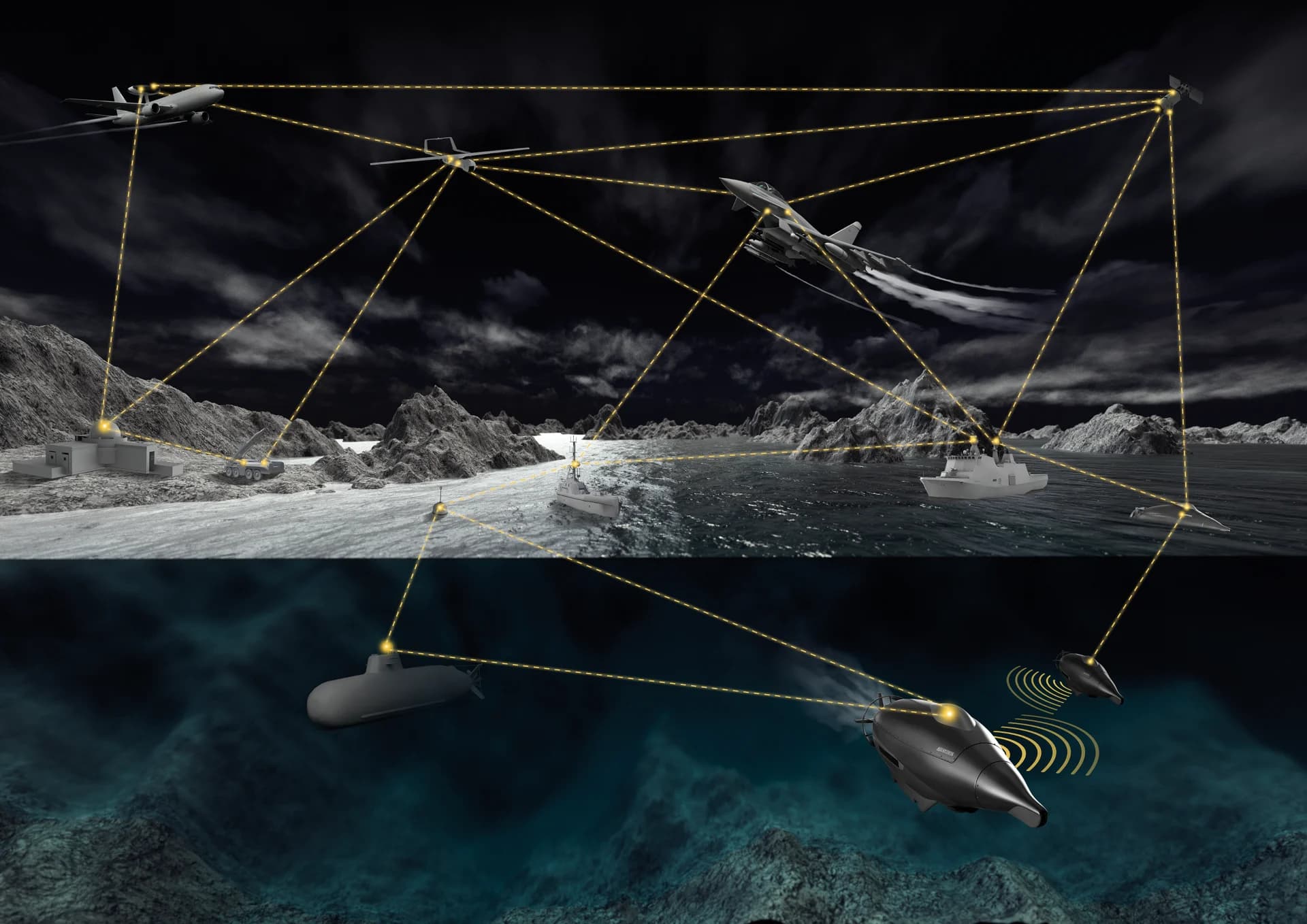
Designs biomimetic underwater robots and acoustic communication systems for naval and offshore operations. Products include autonomous underwater vehicles inspired by penguin locomotion and dolphin-based acoustic modems for subsea positioning. Founded in 2000 in Berlin.
Designs and manufactures autonomous uncrewed surface vessels for naval defence including the Q-RECON series and underwater vehicles. Combines AI-powered Q-MIND autonomy software with maritime hardware for coastal surveillance and special forces operations.
Builds hoistable mast systems, submarine components and torpedo-tube-launched unmanned surface vessels for naval forces worldwide.
Builds cloud and on-premises big data platforms for managing, processing and visualising underwater and terrestrial sensor data, serving navies, offshore wind operators and hydrographic agencies.

Builds military inflatable boats and rigid-hull inflatables for special forces, rescue services and naval operations. Based near Hamburg, the company has designed customized boats for government agencies and security forces since 1987.
Space and satellites
In September 2025 Boris Pistorius announced €35bn of military space spending by 2030, including secure constellations, a Bundeswehr space command and an explicit policy shift toward considering offensive space capabilities. Bremen, where OHB, Airbus Defence and Space and ArianeGroup all have major sites, has more than 140 aerospace companies and 12,000 aerospace jobs. Polaris Spaceplanes in Bremen, founded in 2019, holds the BAAINBw HYTEV contract announced in January 2026 to build a fully reusable two-stage hypersonic test vehicle, fighter-sized, flight-ready by the end of 2027. The company has flown around 250 test flights with seven demonstrators, including a successful aerospike ignition with the MIRA II vehicle, and is integrating Diehl IRIS-T missiles into a hypersonic carrier configuration.
Reflex Aerospace, headquartered in Berlin with manufacturing in Munich, aims at sub-12-month design-to-orbit cycles and launched its first satellite, Sigi, on a SpaceX Falcon 9 in January 2025. In November 2025 Reflex closed a €50m Series A, the largest European new-space Series A to date, led by Human Element and Alpine Space Ventures with Bayern Kapital and HTGF alongside. The Optimas defence-communications project, an EU-funded 12-partner consortium with the Spanish naval prime Navantia in the lead, has Reflex designing the space segment.
Constellr, a 2020 Fraunhofer spinout in Freiburg and Munich, is building a thermal-infrared satellite constellation with DLR as a multi-year customer and raised €37m in February. Marble Imaging in Bremen is building Europe's first daily very-high-resolution Earth observation constellation. Vyoma in Munich, Okapi:Orbits in Braunschweig, Morpheus Space in Dresden and DeltaOrbit at Ottobrunn cover space domain awareness, traffic management and propulsion. Isar Aerospace, also in Ottobrunn, has raised over €400m in total. Its March 2025 inaugural Spectrum launch from Andøya failed 30 seconds in, and a second flight is planned. Rocket Factory Augsburg, the OHB-spun small launcher, is in the same race for the first commercial European orbital flight.
Mynaric, the Gilching laser-comms company that pioneered space optical terminals, exited a StaRUG corporate restructuring in August 2025. Rheinmetall weighed a national counter-bid in February before withdrawing on 11 March, saying it could access Mynaric's technology through licensing or subcontract without buying the company. Rocket Lab closed its $155m takeover on 14 April. The Gilching site is now an American launcher's only European production base.

Reflex Aerospace
Designs and builds custom satellite platforms — optical, SAR and SATCOM — for LEO, delivering flight-ready satellites in under 12 months.

Rocket Factory Augsburg
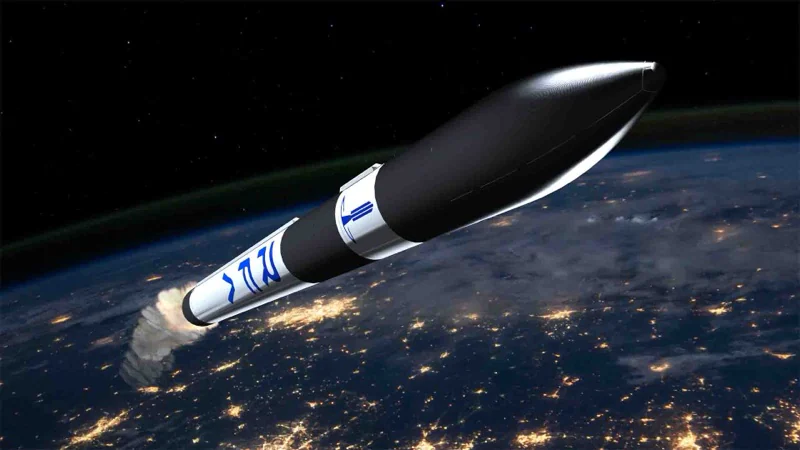
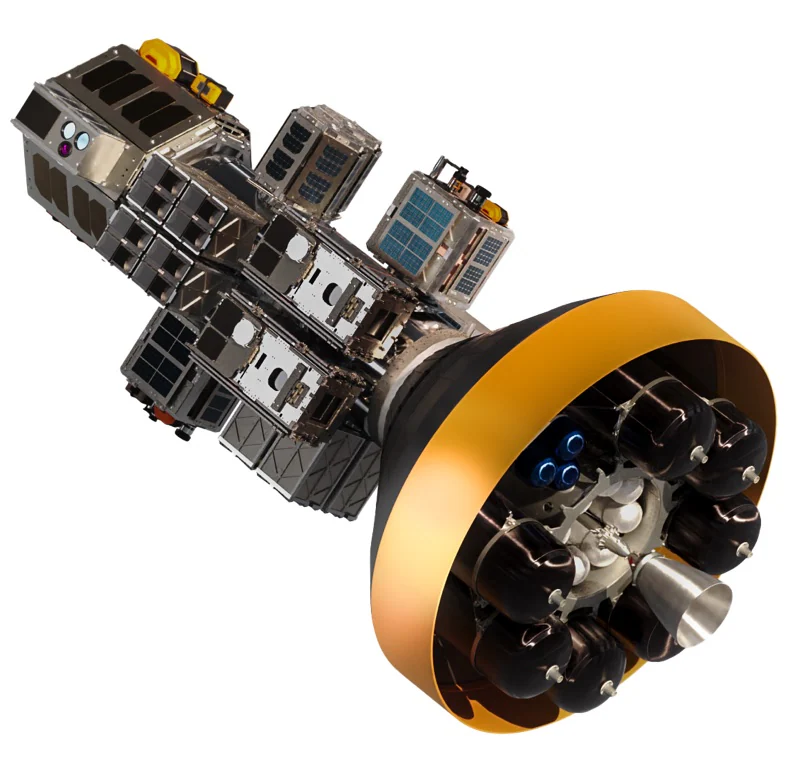
Develops the RFA ONE small launch vehicle and Redshift orbital transfer vehicle to deliver satellites to any orbit from European spaceports.
Designs and operates thermal imaging satellites that give defence, national security and government customers precise, day-and-night surface temperature intelligence invisible to optical or radar sensors.
DeltaOrbit develops next-generation in-space propulsion systems using advanced cryogenic Methane/Oxygen technology. Their satellite engines provide superior agility and endurance for multi-orbit operations, interceptions, and evasions, enabling allied forces to win maneuver warfare in space.
German aerospace startup developing cryogenic fluid management systems, valves, pumps and orbital refuelling technology for reusable launch and space mobility.
Builds Spectrum, a two-stage liquid-fuelled launch vehicle carrying up to 1,000 kg to low Earth orbit, serving the small and medium satellite market from launch sites in Norway and French Guiana.

Building Europe's first commercial Earth Observation satellite constellation for daily high-resolution monitoring. Combines multispectral satellite systems with AI-powered analytics.
Builds FEEP-based electric propulsion systems for small satellites, enabling constellation deployment, collision avoidance, station keeping and deorbiting throughout the entire mission lifetime.
Builds fully reusable horizontal take-off spaceplanes and hypersonic vehicles for both commercial satellite launch and Bundeswehr-contracted defence applications, powered by in-house aerospike rocket engines.

Space situational awareness using AI-driven analytics and a dedicated microsatellite constellation for in-orbit debris tracking. TU Munich spin-off backed by Safran Corporate Ventures and the European Investment Fund, in talks with NATO space commands.
Develops RF electronics, satellite frequency converters and navigation simulators with a growing defence electronics division. Selected by ESA as prime contractor for the IRIS2 secure connectivity constellation test bed.
Soldier systems and advanced materials
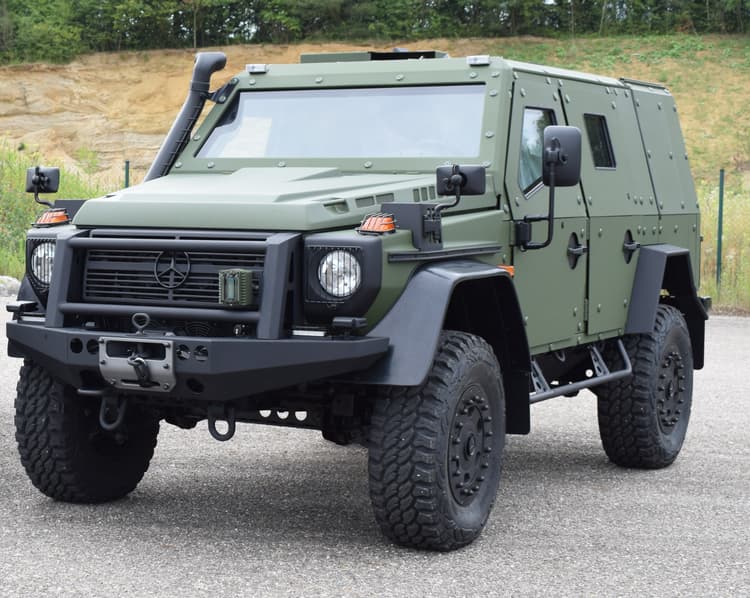
Blücher GmbH, in Erkrath outside Düsseldorf, was founded in 1969 by two brothers, Hasso and Hubert von Blücher, to develop activated-carbon protective clothing. The company has since shipped 12m+ Saratoga protective systems to 55 countries, including 22 NATO members. OPCW chemical-weapons inspectors use Saratoga gear, and most NATO chemical-warfare suits come from Erkrath.
Autoflug, in Rellingen near Hamburg, was founded on 1 October 1919 in Berlin-Johannisthal as Spezialhaus für das AUTOmobil und FLUGwesen. The company moved north in 1958 and now builds parachute systems, ejection-seat integration, energy-absorbing helicopter and crew seats, blast-protected vehicle seats and CBRN protection. It has been a Bundeswehr Martin-Baker partner for over 60 years. Schmidt and Bender in Biebertal makes precision rifle scopes for the United States Marine Corps and USSOCOM. Dynamit Nobel Defence in Burbach, the Panzerfaust 3 maker, broke ground last March on a new tube production hall and has signed Bundeswehr framework agreements for shoulder weapons and Puma IFV reactive armour.
Schuberth in Magdeburg builds the current Bundeswehr Gefechtshelm. Busch PROtective in Gütersloh and Zentauron in Bad Salzuflen build ballistic helmets and plate carriers. Spekon in Saxony has been making parachutes since 1938. ACS Armoured Car Systems in Friedberg won the Bundeswehr Caracal contract for 3,000+ air-transportable armoured vehicles. Drehtainer in Hamburg builds ballistic command-post containers. FibreCoat in Aachen makes metal-coated yarns for radar-absorbing composites. Akhetonics in Berlin builds photonic computing chips, and Blackwave in Munich builds aerospace composites.
Behind these specialists, the German primes are scaling production to match the new orders. Diehl Defence is investing roughly €1bn to scale Iris-T missile production toward 2,000 missiles a year, more than tripling current capacity, with Ukraine signing a €2.2bn contract for additional Iris-T systems in June 2025. MBDA Deutschland is building Europe's first Patriot missile production plant in Schrobenhausen, 50km north of Munich, where the site passed 1,700 staff at the end of 2025. Hypersonica, founded in Munich in late 2023, became Europe's only private hypersonic-missile programme after a €23.3m Series A.
Photonic computing chips processing data at the speed of light for high-performance defence AI and signal processing.
Designs and manufactures aviation safety seats, parachute systems, CBRN protective equipment and blast-protected vehicle seating for military and aerospace customers worldwide.

Advanced composite materials manufacturer for aerospace and defence structural applications. Alpine Space Ventures portfolio.

Develops and manufactures SARATOGA® CBRN protective clothing systems for military, civil defence, fire services and police forces across 55 countries.
Produces the EKA Camlock expandable baton used by German police and over 500,000 law enforcement units worldwide. Also manufactures FlexShield foldable ballistic shields and Hart Armour body protection systems.
Family-owned ballistic helmet manufacturer with over 40 years of history. Developed the combat helmet currently worn by Bundeswehr soldiers. Produces aramid-based helmets certified to DEA-FBI Ballistic Protocol standards from facilities in Gütersloh.

DAWG is an engineering office in Wangen im Allgäu that has produced technical documentation for industrial and military systems since 1980, including S1000D manuals, S2000M spare parts data and logistic support analysis for Bundeswehr programmes.

Manufactures ballistic and blast-protected container systems for military command posts, field camps and nuclear applications, certified to NATO STANAG standards.
Designs and manufactures shoulder-fired weapons, explosive reactive armour, mine-laying systems and aerosol fire suppression for German and international armed forces from its production site in Burbach, Germany.

Builds trapped-ion quantum computers using proprietary microwave-based MAGIC technology for industrial applications in optimization, materials simulation and logistics.
Military container systems manufacturer based in Bremen. Produces protected living units, command shelters, mine detection containers and mobile camp infrastructure for the Bundeswehr and NATO forces worldwide.

A materials technology company developing advanced fiber-reinforced composites and metal-coated fibers for applications including electromagnetic shielding, radar-absorbing materials, and high-performance composites for aerospace and defence sectors.

Manufactures bullet-resistant glass and periscopes for armoured vehicles. Supplies 40+ armies worldwide with over 400 periscope types and composite transparent armour that reduces weight by 10-20% at the same ballistic protection level.
Develops hypersonic vehicles for Europe's resilience and space sovereignty, focusing on advanced aerospace technology for defence and space applications.
Develops superconducting single-photon detectors for photonic quantum sensing and optical quantum computing. Specializes in quantum sensing instrumentation.
Manufactures stainless steel defence components, special machine assemblies and tank track maintenance systems in Saxony. Supplies armoured vehicle parts and custom defence solutions to the Bundeswehr.
Builds quantum key distribution systems for ultra-secure fibre and satellite communications. Fraunhofer IOF spin-off whose entangled photon-pair sources are independently certified and deployed in European quantum network projects. Founded in 2020 in Jena.

Manufactures the Bundeswehr standard combat helmet (Gefechtshelm M92) and the modern M100 ballistic helmet certified to NIJ IIIA and VPAM 2. Produces 1.5 million helmets per year from Magdeburg with around 300 employees. Founded 1922.
Military parachute systems manufacturer certified as a Bundeswehr aviation equipment supplier. Exports to over 30 countries and has produced parachutes for armed forces worldwide for over 70 years from its Saxony facility.
Tactical equipment manufacturer producing plate carriers, ballistic vests, magazine pouches and load-bearing systems for the Bundeswehr, police and special forces. All products are sewn in Germany to military TL specifications.
Explore the ecosystem
The €100bn Sondervermögen Bundeswehr that Olaf Scholz announced three days after the invasion of Ukraine runs out in 2027, and the architecture replacing it is larger and more permanent. None of this is irreversible, and German defence procurement has shown plenty of ways for things to go wrong, from the FCAS dispute to the slipped MGCS schedule. But the capital that has already moved into these companies, the engineers who have changed jobs, and the products already delivered to operational customers are harder to undo. The atlas tracks 100+ of these companies, with more arriving each month. Explore all German companies →
For the roles behind these companies, see the 240+ open defence jobs in Germany, the drone and UAV roles and the defence AI and software roles.

Germany
97 companies · 421 jobs
Industries

STARK Defence
Munich, germany
AEROMARITIME Systembau
Neufahrn bei Freising, germany
Andres Industries
Berlin, germany
Autonomous Teaming Solutions
Potsdam, germany
Avilus
Ismaning, germany
Dynamit Nobel Defence
Burbach, germany
GuS glass + safety
Lübbecke, germany
Hypersonica
Munich, germany
INLEAP Photonics
Hannover, germany
Isar Aerospace
Ottobrunn, germany
Marble Imaging
Bremen, germany
OKAPI:Orbits
Braunschweig, germany
PLATH
Hamburg, germany
Quantum Systems
Gilching, germany
Reflex Aerospace
Berlin, germany
Rocket Factory Augsburg
Augsburg, germany
SE3Labs
Munich, germany
Tytan Technologies
Munich, germany
ZeroPhase
Munich, germany
ACS Armoured Car Systems
Friedberg, germany
Aerodata AG
Braunschweig, germany
Dedrone
Kassel, germany
Drehtainer
Hamburg, germany
Helsing
Munich, germany
eleQtron
Siegen, germany
Maltego Technologies
Munich, germany
Blücher
Erkrath, germany
ELAC SONAR
Kiel, germany
hema electronic
Aalen, germany
SMAG Mobile Antenna Masts
Salzgitter, germany
unival group
Bonn, germany
north.io
Kiel, germany
ARX Robotics
Munich, germany
DAWG GmbH & Co. KG
Wangen im Allgäu, germany
Germandrones
Berlin, germany
Project Q
Munich, germany
VECTED
Fürth, germany
3YOURMIND
Berlin, germany
Gabler Maschinenbau
Lübeck, germany
ODM GmbH
Wattenheim, germany
Vyoma
Munich, germany
21strategies
Munich, germany
Aaronia
Strickscheid, germany
ADAMS Simulation and Training
Wittmund, germany
AEREUS
Munich, germany
Akhetonics
Berlin, germany
Alpine Eagle
Munich, germany
Autoflug
Rellingen, germany
BA Clearance
Tautenhain, germany
blackned
Heimertingen, germany

Blackwave
Munich, germany
Bonowi
Mainz, germany
BreachLense
Ahlen, germany
Busch PROtective
Gütersloh, germany
CeoTronics
Rödermark, germany
Cestron International
Berlin, germany
Constellr
Freiburg, germany
DeltaOrbit
Munich, germany
Donaustahl
Hutthurm, germany
ELNA GmbH
Tangstedt, germany
EUROATLAS
Hamburg, germany
EvoLogics
Berlin, germany
FHF GmbH
Bremen, germany
FibreCoat
Aachen, germany
FLANQ
Rostock, germany
GSMK CryptoPhone
Berlin, germany
HAT.tec
Munich, germany
HIGHCAT
Konstanz, germany
JK Defence & Security Products
Kempen, germany
Lateration
Erding, germany
Morpheus Space
Dresden, germany
Munich Quantum Instruments
Munich, germany
MWK Defence
Konigswartha, germany
NEOSAT
Neubiberg, germany
NeuralAgent
Munich, germany
Orbint
Munich, germany
Polaris Spaceplanes
Bremen, germany
Quantum Optics Jena
Jena, germany
Reiser Simulation and Training
Berg, germany
RISEPORT Europe
Hamburg, germany
RobCo
Munich, germany
Schmidt & Bender
Biebertal, germany
SCHUBERTH
Magdeburg, germany
Scipio Networks
Berlin, germany
Secublox
Neubiberg, germany
Skylance
Hürth, germany
SPEKON
Seifhennersdorf, germany
SWARM Biotactics
Kassel, germany
Traversals Analytics and Intelligence
Uttenreuth, germany
True Detection Systems
Berlin, germany
Twentyfour Industries
Munich, germany
Uni-Safe
Wedel, germany
WARGdrones
Hamburg, germany
Wingcopter
Weiterstadt, germany
WORK Microwave
Holzkirchen, germany
Zentauron
Bad Salzuflen, germany
Zippermast
Bad Reichenhall, germany